Customers find the right part by VIN. Orders go straight into the order system.
An established auto-parts business selling OE parts for Japanese and Korean makes needed its own online shop. We built it: a catalogue synced from an order management system, car identification by VIN or a scan of the registration document, InPost lockers and courier, DPD for oversize parts, and cash on delivery. It is built and launching.
Built · launching
- OEparts for Japanese and Korean makes, kept in step with the order management system
- VINor a registration-document scan finds the customer’s car
- 3ways to deliver: InPost locker, InPost courier, DPD for oversize parts
- 1system for catalogue, orders and delivery, instead of three
An established parts business without a shop of its own
The client sells OE parts for Japanese and Korean makes. The business was already running. What it didn’t have was its own online shop.
Selling parts online has its own traps. A customer who picks the wrong part sends it back. Oversize parts don’t fit in a parcel locker. And EU product-safety rules (GPSR) expect safety information for every product.
- Help customers pick the part that fits their car.
- One catalogue: the order management system stays the source, the shop follows it.
- Orders into the order system without retyping.
- Lockers and courier for most parts, a separate route for oversize ones.
- GPSR safety data and a Google Shopping feed.
Catalogue, orders and delivery as one system
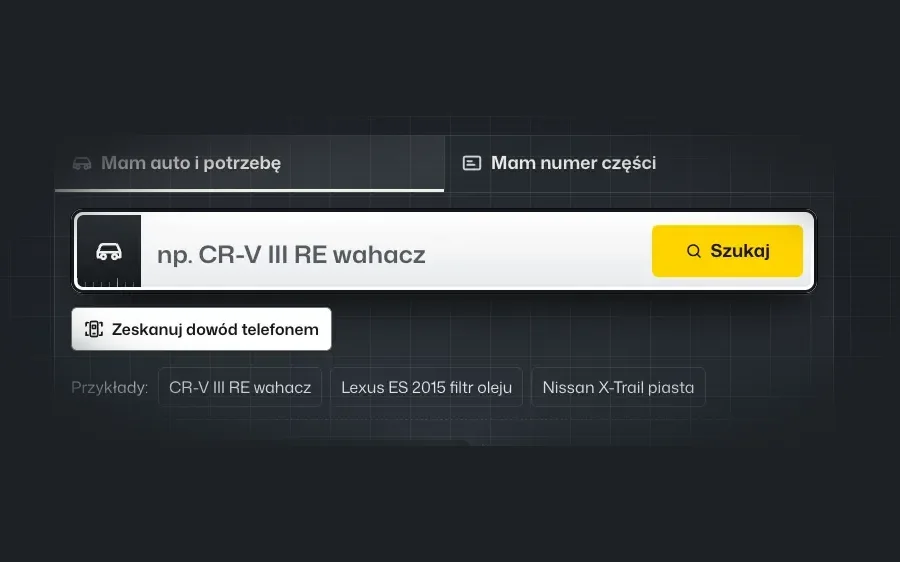
Find the car by VIN or a document scan
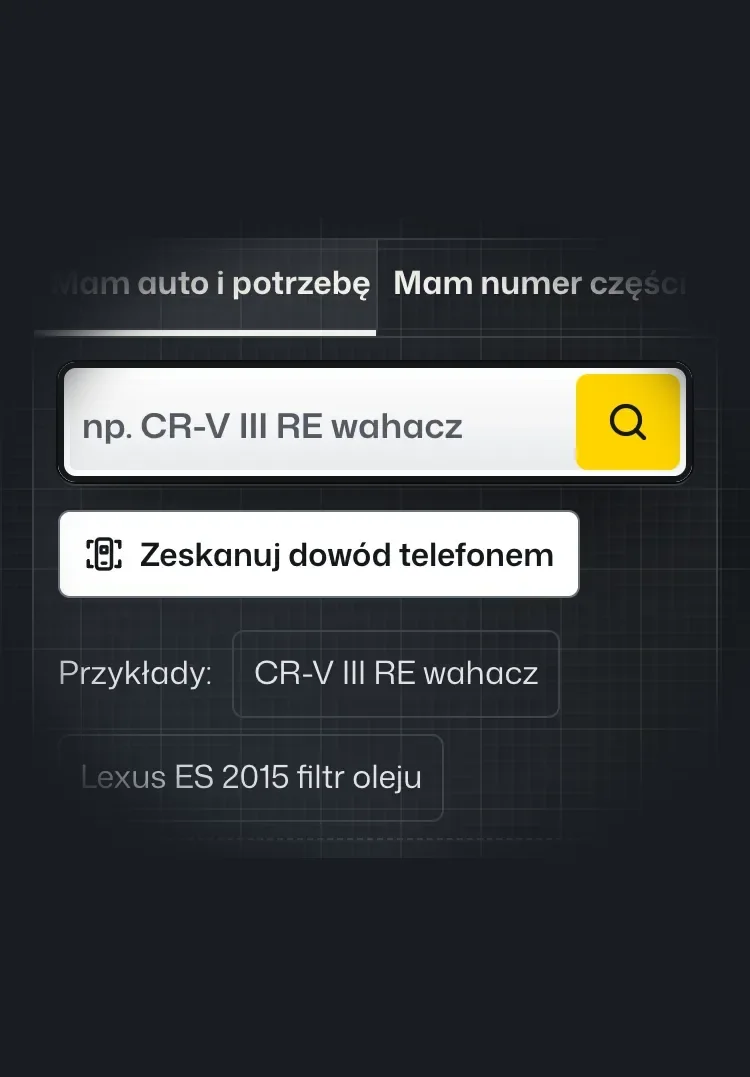
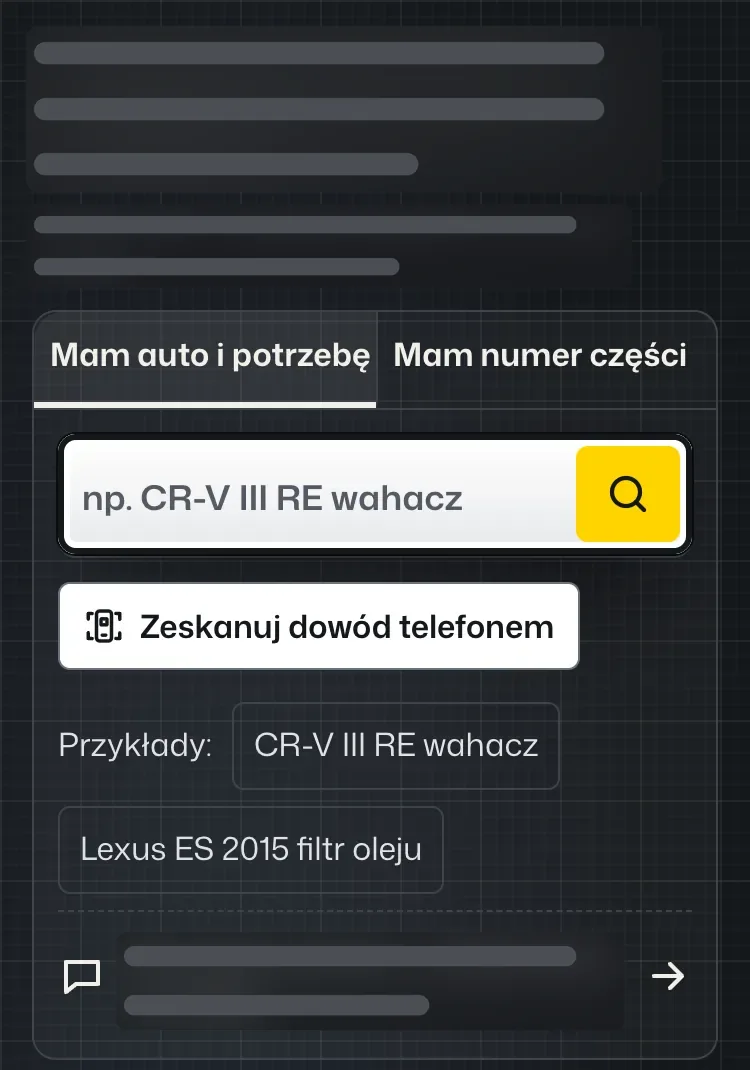
Customers can identify their car by VIN or by scanning the registration document, instead of guessing from a list of models.
Catalogue synced from an order management system
Parts come from the order management system, so the shop follows the catalogue the business keeps there.
Orders passed to the order system through an outbox
Every order goes into an outbox and on to the order system.
Delivery and payment
InPost lockers and InPost courier, and DPD for oversize parts. Payment is cash on delivery for now.
Product safety and Google Shopping
GPSR product-safety data is kept in Google Sheets and attached to the products. A Google Merchant feed lets the products appear on Google.
In shortFast product pages, a database for parts and orders, and a sync with the back office.
The buy box and the search

Selling parts, or anything with a big catalogue?
The order management system stays the source of truth; the shop follows it. Real orders were never used for testing. You own the code, the data and every account.
Built to be found where people search for parts
People looking for a part search for its number or their car. Every part has its own page, and the catalogue goes to Google Merchant Center, where Google Shopping listings come from.
A search for a part reaches the part, not a category page the customer has to dig through.
Safety details stay current. The EU product-safety (GPSR) data comes from a Google Sheet the team edits.
An outage delays an order. It doesn’t lose it.
A shop that takes orders can’t quietly drop one.
Every order is saved first, then passed to the order system. If the order system is down, the order waits and goes through when it is back.
The order flow is rehearsed on a stand-in copy of the order system, so a change to the shop is checked without touching a real order.
Where to go from here
Running a shop on an order management system?
Tell us how orders move through your business today. We’ll tell you what we’d build first.
We reply within one business day, Tallinn time (EET), usually within a few hours. No obligation.