Auto parts e-commerce where customers find the part that fits
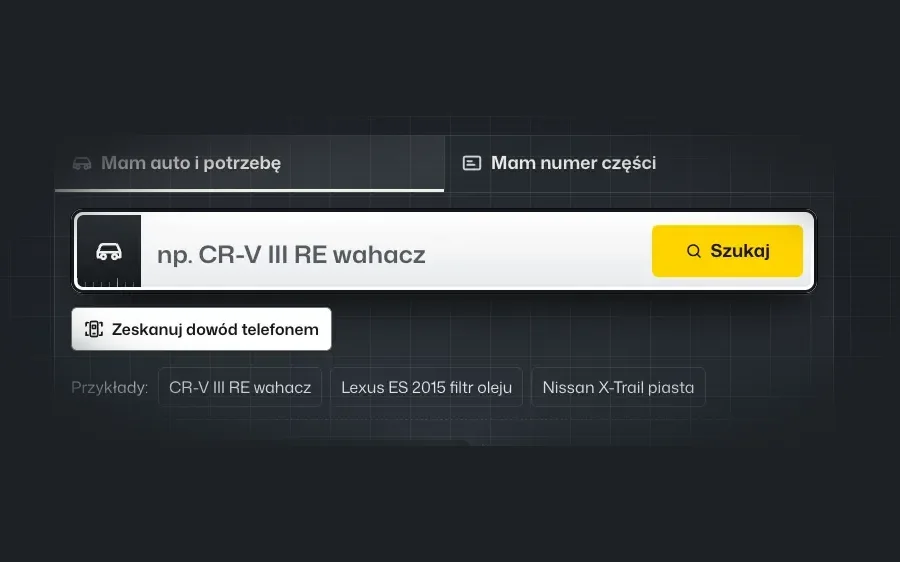
We build auto parts e-commerce shops around the questions parts buyers ask: does it fit my car, is it in stock, and how will a bumper be delivered. We built one for an established auto-parts business selling OE parts for Japanese and Korean makes: car identification by VIN or a scan of the registration document, a catalogue synced from an order management system, InPost for parcels and DPD for oversize parts. It is built and launching.
- OEparts for Japanese and Korean makes
- VINor a registration-document scan to identify the car
- 3ways to deliver: InPost locker, InPost courier, DPD
- GPSRproduct-safety details with each product
What makes parts hard to sell online, and what we build for it
“Does this fit my car?” all day
Customers can’t tell from a model list whether a part fits, so they call, or they order and send it back.
What we buildCar identification by VIN or a scan of the registration document, so the customer starts from their car instead of guessing a model and year.
Part numbers live in the ERP, not on the page
OE numbers and cross-references sit in a spreadsheet or the back office. The counter knows them; the website doesn’t.
What we buildOE numbers shown and searchable on each product page, pulled from the data you already keep. If you license a catalogue database, we check on the call how it can be connected.
A bumper doesn’t fit in a parcel locker
Bulky parts need a different carrier, and staff split shipments and rebook them by hand.
What we buildDelivery options matched to the part: lockers and courier for most items, a separate carrier for oversize ones. The parts shop uses InPost and DPD this way.
The same part gets sold twice
Shop stock and marketplace stock drift apart, and the last unit goes to two buyers.
What we buildOne catalogue source in the order management system. The shop follows it, and orders go back through an outbox that resends if the order system doesn’t answer.
A photo of the registration document instead of a VIN
Buyers send what they have, and someone types the details in.
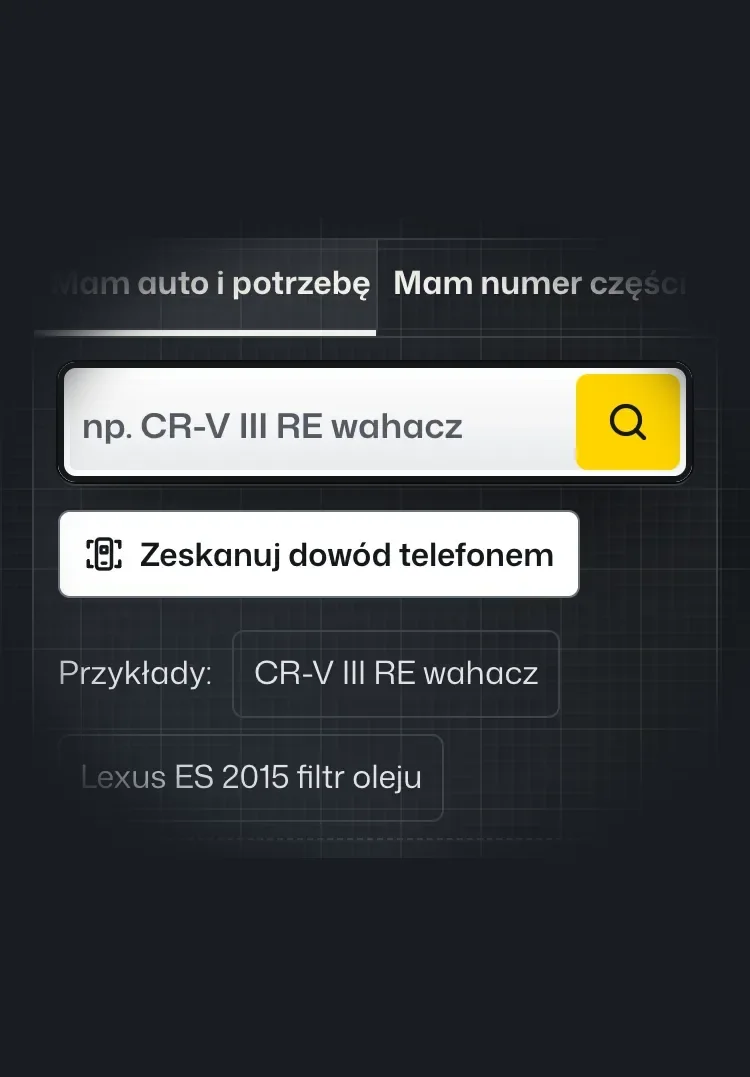
What we buildA document scan built into the shop, so the photo becomes the car’s details without anyone retyping them.
Thousands of near-identical product pages
Parts differ by a number and a fitment line, and thin pages are easy for Google to ignore.
What we buildProduct pages generated from part data, with checks that hold back pages too close to others. We use the same kind of gate on the forwarder’s route pages.
Workshops want their own terms
Trade customers order often and expect their prices and a quick reorder.
What we buildTrade accounts with their own price lists and order history, on the same catalogue as retail.
How the pieces connect
Relevant case
What we built for an established auto-parts business
The client sells OE parts for Japanese and Korean makes. The business was running; what it lacked was its own shop. It is built and launching.
- Find the car by VIN or a scan of the registration document.
- A catalogue from the order management system, orders back through an outbox.
- InPost lockers and courier, DPD for oversize parts.
- GPSR safety data and a Google Merchant feed.
Selling parts by phone and marketplace?
We build the shop around fitment, part numbers and delivery rules, then keep it running.
How the work runs
Tell us what happens today
Tell us how customers find parts today, where your part data lives, and how bulky items ship. We reply within one business day, usually within a few hours.
A free first look
An online call, and an outside check of your site with XRay, our own audit tool. A deeper audit is scoped after the call.
Build, or take over
We build the missing parts, or take over a system someone else built. One team covers analysis, build, testing and DevOps.
Keep it running
Fixes, security updates and new features. Hourly billing, one rate for the whole team, a report every week.
You own the code, the data and every account. More on how we work and the systems we have built.
What this doesn’t do
No catalogue data from us. Part numbers and fitment come from your data or a catalogue you license. We connect it; we don’t sell it.
Card payments in your own account. We connect Stripe or Paddle in an account in your company’s name, so the money never passes through us.
No ranking promises. We build pages that search engines can read. Positions on Google are not ours to promise.
No prices before we talk. Billing is hourly with weekly reports, scoped after the call.
Questions we get from parts sellers
Can customers search by VIN?
Yes. In the parts shop a customer can identify the car by VIN or by scanning the registration document, instead of picking a model from a list.
Do we need a licensed catalogue such as TecDoc?
Not to start. Many parts sellers already have OE numbers and cross-references in their ERP or a spreadsheet, and the shop can use those. If you license a catalogue, we check its terms and connection options on the call.
How are oversize parts handled?
The shop offers delivery options that fit the part. In the case, InPost covers lockers and courier, and DPD takes oversize parts.
We also sell on marketplaces. Will stock stay in step?
Yes, if one system holds the catalogue. In the case, the order management system holds the catalogue, the shop follows it, and orders go back to it so marketplace and shop draw from the same stock.
Can the shop be in more than one language?
Yes. Our car-service site and freight platform each run in three languages, with pages written for each language.
Can you move our existing shop?
Yes. We carry your page addresses over or redirect them, so Google can follow the move, and we bring your products, customers and order history across where the old system lets us export them. We don’t promise rankings.
Where to go from here
Answering “does it fit?” all day?
Tell us where your part data lives and how bulky items ship today.
We reply within one business day, Tallinn time (EET), usually within a few hours. No obligation.